
Electric bikes, or e-bikes, have revolutionized the way we commute, exercise, and explore the outdoors. They combine the joy of cycling with the convenience of electric assistance, making hills feel flat and long distances more manageable. However, like any piece of technology, e-bikes can encounter issues that leave you stranded or frustrated. If your e-bike is not working, don’t panic—many problems can be resolved with basic electric bike troubleshooting steps. This in-depth guide will walk you through common issues, step-by-step solutions, and preventive tips to keep your ride smooth and reliable.
Whether you’re dealing with a dead battery, a non-responsive motor, or mysterious error codes, understanding the basics of e-bike maintenance can save you time and money. We’ll cover everything from simple checks to more advanced diagnostics, ensuring you’re equipped to handle most scenarios. Remember, safety comes first: always disconnect the battery before performing any repairs.
Understanding the Basics of E-Bike Components
Before diving into specific problems, it’s helpful to know the key parts of an e-bike. The battery powers the system, the motor provides assistance, the controller acts as the brain regulating power flow, and sensors (like those for brakes and pedals) ensure everything works in harmony. Wiring connects it all, while the display shows status and errors. Mechanical elements like tires, brakes, and chains also play a role, as they can indirectly affect electric functions.
If your e-bike not working stems from one of these areas, systematic electric bike troubleshooting can pinpoint the issue. Start with the simplest checks—such as ensuring the bike is turned on and the battery is charged—before moving to complex diagnostics.
Common Battery Issues and How to Fix Them
Battery problems are among the most frequent reasons an e-bike stops working. According to various guides, up to 35% of e-bike issues involve the battery. Symptoms include no power, reduced range, or failure to charge.
Battery Not Charging
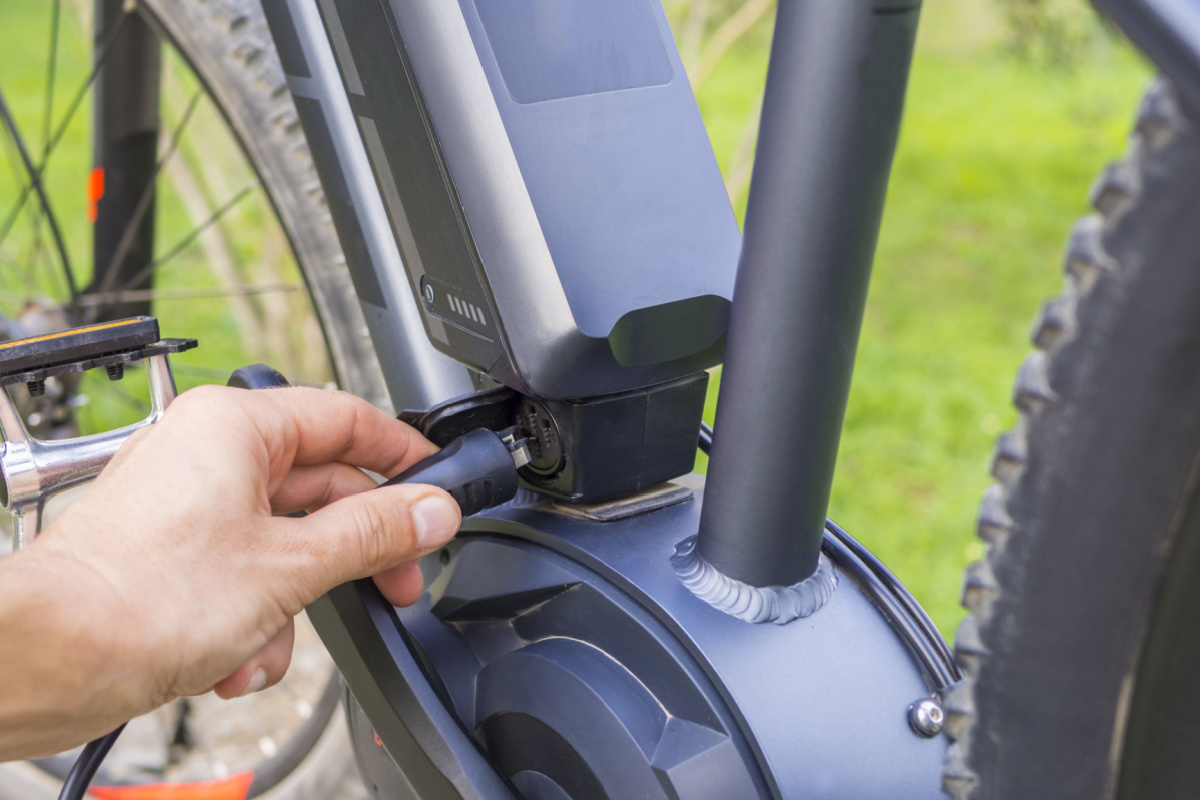
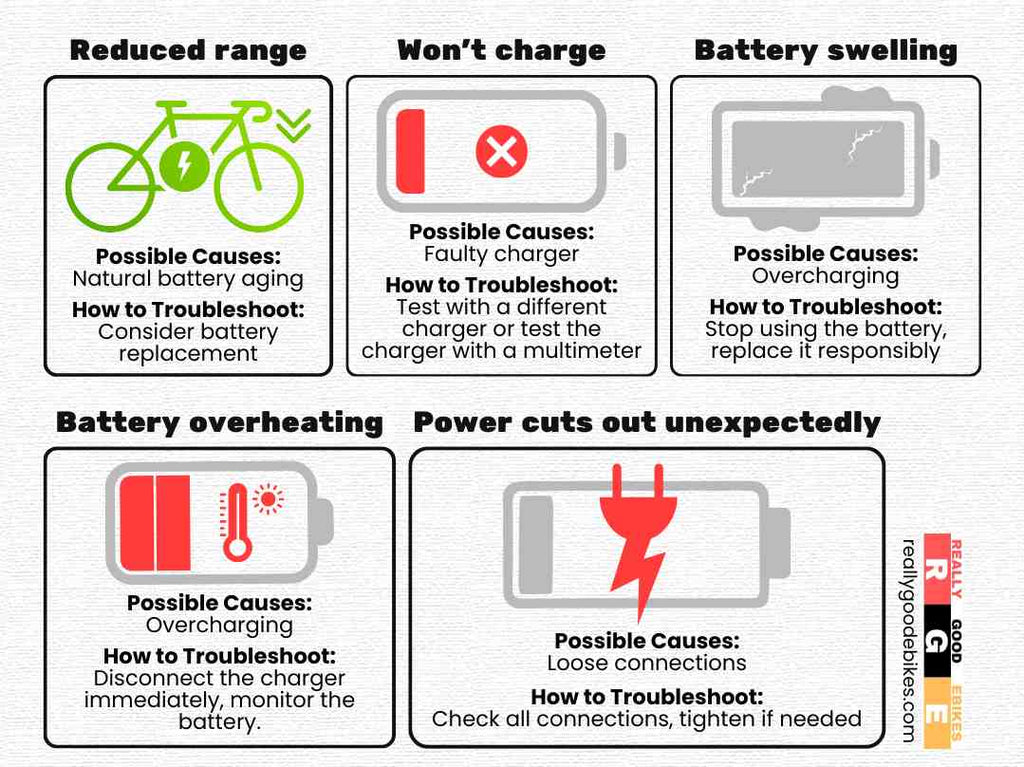
If your battery won’t charge, first inspect the charger and connections. Ensure the charger is plugged into a working outlet and the ports are clean. Test with a multimeter to check if the charger outputs the correct voltage (usually 36V or 48V for most e-bikes). If the charger is faulty, replace it. Over time, batteries degrade naturally, losing capacity after 500-1000 charge cycles.
For lithium-ion batteries, common in modern e-bikes, avoid extreme temperatures as they can cause swelling or overheating. If the battery is swollen, stop using it immediately and seek a replacement to prevent fire risks.
https://powerpedalse-bikes.com
Common Causes Of Electric Bike Battery Drain | IRide San Diego
Reduced Battery Range
Experiencing shorter rides than usual? Factors like tire pressure, rider weight, terrain, and assist level affect range. Check for natural aging: if your battery is over two years old, it might hold less charge. Optimize by keeping tires inflated to the recommended PSI (usually 30-50 for e-bikes) and using lower assist modes on flat ground.
If the issue persists, perform a capacity test: fully charge, ride until empty, and measure the distance against the manufacturer’s specs. Tools like a voltmeter can help diagnose undervoltage errors (e.g., code E006).
E-Bike Batteries FAQ: Everything You Need to Know
Battery Power Cuts Out Unexpectedly
This could be due to loose connections or a faulty Battery Management System (BMS). Inspect all cables for damage and reseat them. If the problem continues, it might indicate a deeper issue like cell imbalance, requiring professional service.
Preventive tip: Store your battery at 50-70% charge in a cool, dry place during off-seasons to extend its lifespan.
Motor Problems: Diagnosing and Repairing
The motor is the powerhouse of your e-bike, but it can fail due to overuse, water damage, or wiring issues. If your e-bike not working involves no assistance when pedaling or throttling, the motor might be the culprit.
Motor Not Engaging
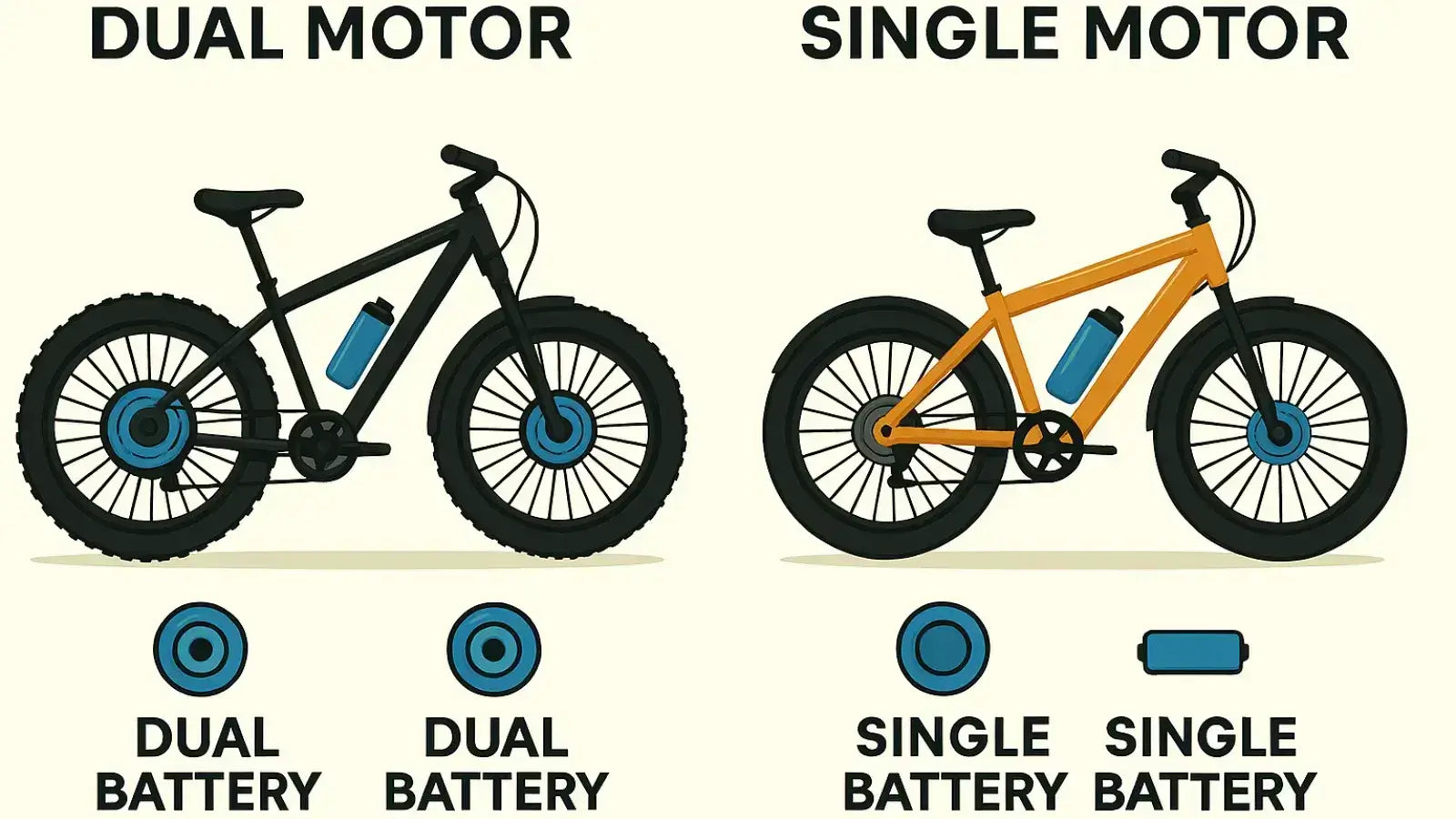
Start with the basics: ensure the pedal assist sensor (PAS) is clean and aligned. Dirt or misalignment can prevent activation. For hub motors, check for unusual noises like grinding, which might indicate bearing wear.
Test by disconnecting the motor cable and reconnecting it. If it’s a geared hub motor, overheating from steep climbs could trigger a cutoff—let it cool down. Error codes like E007 often point to motor failure.
Ebike Hub Motor Problems: Common Issues & Repair Tips 2025
Motor Overheating or Burning Out
Motors can overheat if pushed too hard, especially on inclines. Avoid this by shifting to lower gears and using appropriate assist levels. If the motor smells burnt, it may need replacement—consult a technician as DIY motor repairs can be complex.
For mid-drive motors, chain tension is crucial; a loose chain can strain the motor. Regularly lubricate and adjust as needed.
Hall Sensor or Phase Wire Issues
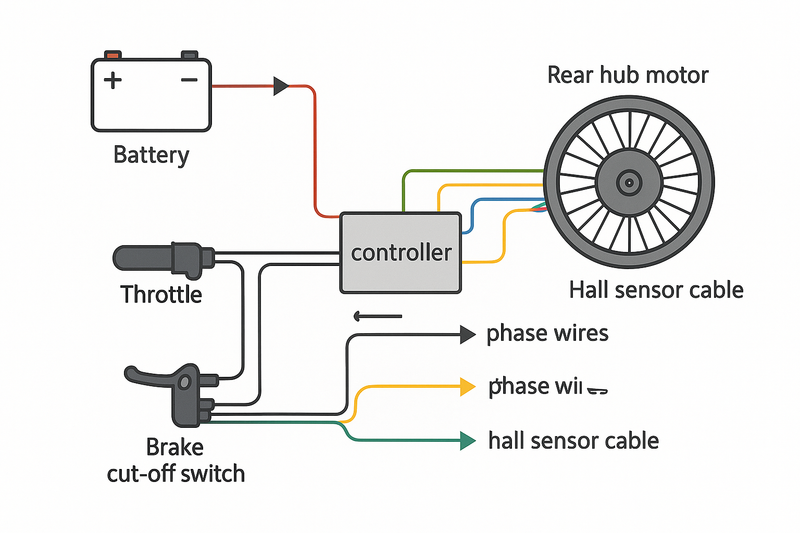
Advanced electric bike troubleshooting might reveal faulty Hall sensors, which detect rotor position. Symptoms include jerky movement or no power. Use a multimeter to test continuity in phase wires (yellow, green, blue). If damaged, re-solder or replace the wires.
Controller Failures: The Brain of Your E-Bike
The controller manages power distribution. If it’s faulty, your e-bike might not turn on or respond erratically.
No Power to the System
Check fuses first—they’re cheap and easy to replace. Water ingress is a common killer; if your bike got wet, dry it thoroughly. Error codes like E009 indicate controller issues.
Erratic Speed or Power
This could stem from throttle faults. Test the throttle with a multimeter: it should read 1-4V when twisted. If not, replace it. Controllers can also fail from voltage spikes—use surge protectors when charging.
Rear-Wheel Hub Motor E-Bike Wiring Issues – Common Problems & Troubleshooting Guide
Wiring and Connection Problems
Loose or damaged wiring is a top cause of e-bike not working, accounting for many intermittent issues.
Inspecting and Fixing Wires
Visually check all cables for frays, corrosion, or pinches. Pay attention to brake cut-off switches, which can stick and prevent power. Use zip ties to secure loose wires and electrical tape for minor repairs.
For comprehensive checks, trace wires from battery to motor, ensuring connectors are secure. If using a waterproof system, verify seals are intact.

Rear-Wheel Hub Motor E-Bike Wiring Issues – Common Problems & Troubleshooting Guide
Common Wiring Faults
Brake inhibitors often cause power cutoffs if misaligned. Throttle wires (red, black, green/white) should show continuity. If not, soldering might fix it, but consider professional help for safety.
Display and Error Codes: Decoding the Messages
Modern e-bikes have LCD displays that show error codes, making electric bike troubleshooting easier.
Common Error Codes
- E006: Low voltage—charge the battery.
- E008: Throttle error—check connections or replace.
- E010: Communication failure—reseat display cables.
Refer to your model’s manual for specific codes. If the display is blank, check the power button and fuses.
Error codes – NAKTO BIKES
Display Malfunctions
25% of issues involve displays. Clean contacts and ensure firmware is updated if applicable.
Brake and Sensor Issues
Brakes are critical for safety, and sensors ensure the motor cuts off when braking.
Brake Cut-Off Not Working
Test by squeezing brakes— the motor should stop. If not, adjust or replace sensors. Hydraulic brakes might need bleeding if spongy.
PAS Sensor Problems
If pedal assist fails, clean the magnet disc on the crank. Misalignment is common after crashes.

Amazon.com: Hidden Wire Brake Sensor Bike Power Cut Off Brake Sensor Without Using The Normal Lever (one Piece) : Sports & Outdoors
Tire and Mechanical Problems Affecting Performance
While not purely electric, mechanical issues can mimic e-bike not working symptoms.
Flat Tires or Low Pressure
Low pressure increases rolling resistance, draining the battery faster. Inspect for punctures and inflate regularly. For fat tires, use sealants to prevent flats.
Chain and Gear Issues
A dirty chain can strain the motor. Clean and lube every 200 miles. Adjust derailleurs if shifting is rough.
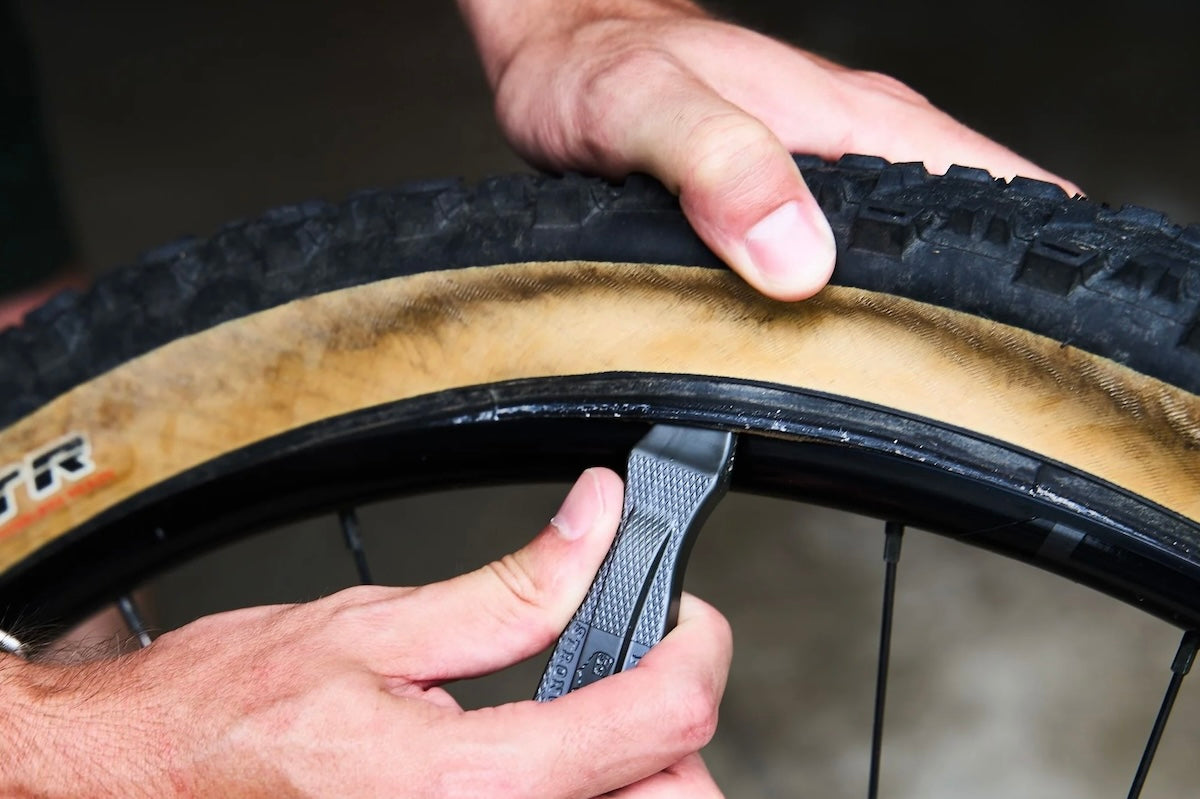
When to Replace Bike Tires: Signs and Maintenance Tips – Rize Bikes Canada
Essential Tools for Electric Bike Troubleshooting
To handle most fixes, you’ll need:
- Multimeter for electrical tests
- Allen keys and wrenches for mechanical adjustments
- Tire levers and pump for flats
- Screwdrivers and pliers
A portable repair kit is ideal for on-the-go fixes.

Bicycle Repair Tool Kit – Cyrusher E-Bikes
Safety Precautions During Repairs
Always wear gloves and eye protection. Disconnect the battery to avoid shocks. If unsure, consult a professional—especially for high-voltage systems.
When to Seek Professional Help
If basic electric bike troubleshooting doesn’t resolve the issue, or if you suspect water damage or burnt components, visit a certified e-bike shop. Warranty might cover repairs if the bike is new.
Conclusion
Electric bike troubleshooting doesn’t have to be intimidating. By methodically checking batteries, motors, controllers, and more, you can fix most cases when your e-bike is not working. Regular maintenance—like cleaning, charging properly, and inspecting components—prevents many problems. Stay safe, ride smart, and enjoy the freedom of your e-bike.
FAQs
What should I do first if my e-bike not working?
Check if the battery is charged and securely connected. Then, inspect for loose wires or error codes.
How often should I perform maintenance on my e-bike?
Every 200-500 miles, or monthly if ridden frequently. Include tire checks, chain lubing, and battery inspections.
Can I fix a swollen battery myself?
No—swollen batteries are hazardous. Replace them immediately.
What’s the average lifespan of an e-bike battery?
3-5 years, depending on usage and care.
Why does my e-bike cut out on hills?
Likely overheating or low battery. Use lower gears and monitor temperature.
