
In today’s fast-paced world, more people are turning to eco-friendly transportation options that blend convenience with sustainability. One popular choice is the folding electric bike, or e-bike, which offers the perfect mix of portability and power-assisted riding. But a common question arises for commuters and travelers: is a folding ebike train legal? This guide dives deep into the legality of bringing these compact rides on trains across various regions, including the United States, the United Kingdom, and Europe. We’ll explore key regulations, safety tips, and why folding e-bikes are a game-changer for multi-modal travel. Whether you’re a daily commuter or planning a cross-country adventure, understanding these rules can help you avoid fines and travel smoothly.

https://powerpedalse-bikes.com
8 reasons to have a folding electric bike – FLIT
Understanding Folding Electric Bikes: What Makes Them Special?
Before we tackle the question of whether a folding ebike train legal status holds up, let’s break down what these bikes are. A folding e-bike is essentially an electric bicycle designed with hinges in the frame, allowing it to collapse into a compact size for easy storage and transport. Unlike standard e-bikes, which can be bulky, folding models typically feature smaller wheels (often 16-20 inches) and lightweight materials, making them ideal for urban environments.
These bikes are powered by a battery and motor that assist pedaling, usually up to speeds of 15-20 mph (25-32 km/h), depending on local laws. Popular brands like Brompton, Dahon, and Ride1Up offer models that fold in seconds, fitting into dimensions as small as 34″ x 15″ x 48″ when collapsed. This portability is key to their appeal, especially for those wondering about folding ebike train legal requirements.
Folding e-bikes aren’t just about convenience—they’re built for versatility. They can handle city streets, light trails, and even short commutes, with battery ranges often exceeding 20-40 miles on a single charge. However, their legal status on public transport hinges on factors like size, weight, battery type, and regional policies.

Portola – Ride1Up | Best Value Folding Ebike
The General Legality of E-Bikes on Trains: An Overview
When it comes to public transportation, rules for bicycles—and by extension, e-bikes—vary widely. The core issue with e-bikes is their lithium-ion batteries, which pose potential fire risks if not handled properly. Many transit authorities treat folding e-bikes more leniently than non-folding ones because they can be stored like luggage.
In general, a folding ebike train legal allowance depends on:
- Size and Weight Limits: Most trains require bikes to be under 50 lbs and fit specific dimensions when folded.
- Battery Regulations: Batteries must be certified (e.g., UL 2849 or UL 2271 standards) and not charged on board.
- Peak Hour Restrictions: Some services ban bikes during rush hours to avoid overcrowding.
- Reservations and Fees: Advance booking might be needed, with fees ranging from free to $20 or more.
It’s crucial to check with the specific train operator, as policies can change. For instance, gas-powered bikes are universally prohibited due to safety concerns.
Folding Ebike Train Legal Rules in the United States
In the US, train travel with bikes is increasingly supported as part of sustainable mobility initiatives. Amtrak, the primary national rail service, has clear guidelines that make a folding ebike train legal in many scenarios. Folding e-bikes under 34″ x 15″ x 48″ when collapsed can be brought on board as carry-on luggage without extra fees on most routes. They must be stored in designated areas, and electric models are allowed if they’re low-speed (under 20 mph motor-only) with motors producing less than 750W.
Amtrak accepts e-bikes powered by certified lithium-ion batteries, but gas-powered ones are banned. For non-folding e-bikes, options include walk-on service or checked baggage on select trains, with a $10-20 fee. Regional services like Metrolink in California permit folding e-bikes in bike storage areas, with size limits of 32″ x 58″. Valley Metro in Arizona allows e-bikes but requires them to be powered off during transport.
In New York, the MTA treats folded e-bikes as regular luggage on subways and buses, but limits apply on railroads during peak times. Always confirm route-specific rules, especially on long-distance trains like the Empire Builder, where boxing might be required. Overall, the US is bike-friendly, but preparation is key to ensuring your folding ebike train legal journey goes smoothly.
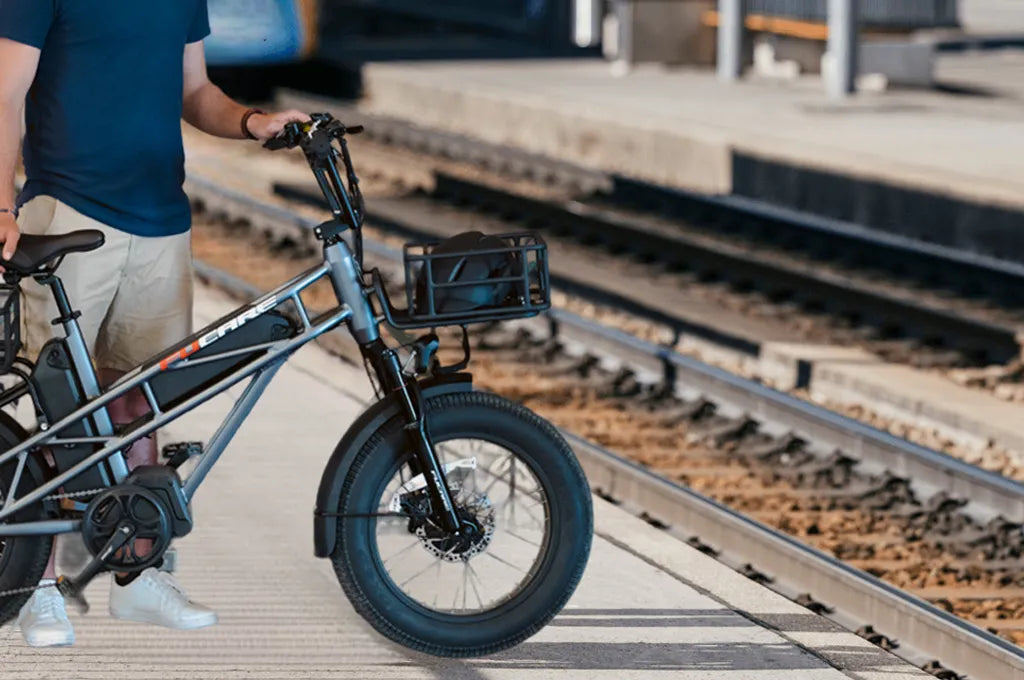
Can Electric Bikes Be Taken on Trains?
Folding Ebike Train Legal Regulations in the United Kingdom
The UK has seen significant changes in e-bike policies, particularly in London. Transport for London (TfL) implemented a ban on non-folding e-bikes on most services starting March 31, 2025, due to battery fire risks. This affects the Tube, Overground, Elizabeth line, and DLR, but folded e-bikes are still permitted anywhere, anytime, as long as they’re compact and don’t obstruct pathways.
For national trains, operators like Transport for Wales welcome Electrically Assisted Pedal Cycles (EAPCs) under the same rules as pedal bikes: max 250W motor, 15.5 mph assist limit. Folding models often bypass peak-hour restrictions and don’t require reservations. Batteries can’t be charged on board, and removal is only allowed for folding purposes.
In buses, acceptance is at the driver’s discretion, but smaller folded e-bikes are usually fine outside rush hours. The key takeaway? If you’re asking if a folding ebike train legal in the UK, the answer is generally yes, provided it meets EAPC standards and is folded during travel.

Folding E-Bikes: Electric Foldable Bikes by Dahon
Folding Ebike Train Legal Policies Across Europe
Europe’s rail network is vast and varied, making a folding ebike train legal status dependent on the country and operator. In general, folding e-bikes are treated as hand luggage if they’re under 85cm long when folded, with no size or weight restrictions on many international services.
Eurostar allows folded e-bikes in protective bags (max 85cm) as free luggage, but charging is prohibited on board or at stations. In Germany, Deutsche Bahn requires a bike ticket and reservation for non-folding e-bikes on IC/EC/ICE trains, but folded ones are often exempt. The Netherlands’ NS permits e-bikes outside peak hours with an off-peak bike ticket.
France’s SNCF has stricter rules; many TGV lines don’t accept assembled bikes, so folding is essential. Spain’s Renfe treats folded bikes as hand luggage if under 180cm total dimensions. A recent EU agreement harmonizes rules for cross-border trains, removing size limits for standard and folding e-bikes. Always book in advance for popular routes to ensure your folding ebike train legal compliance.
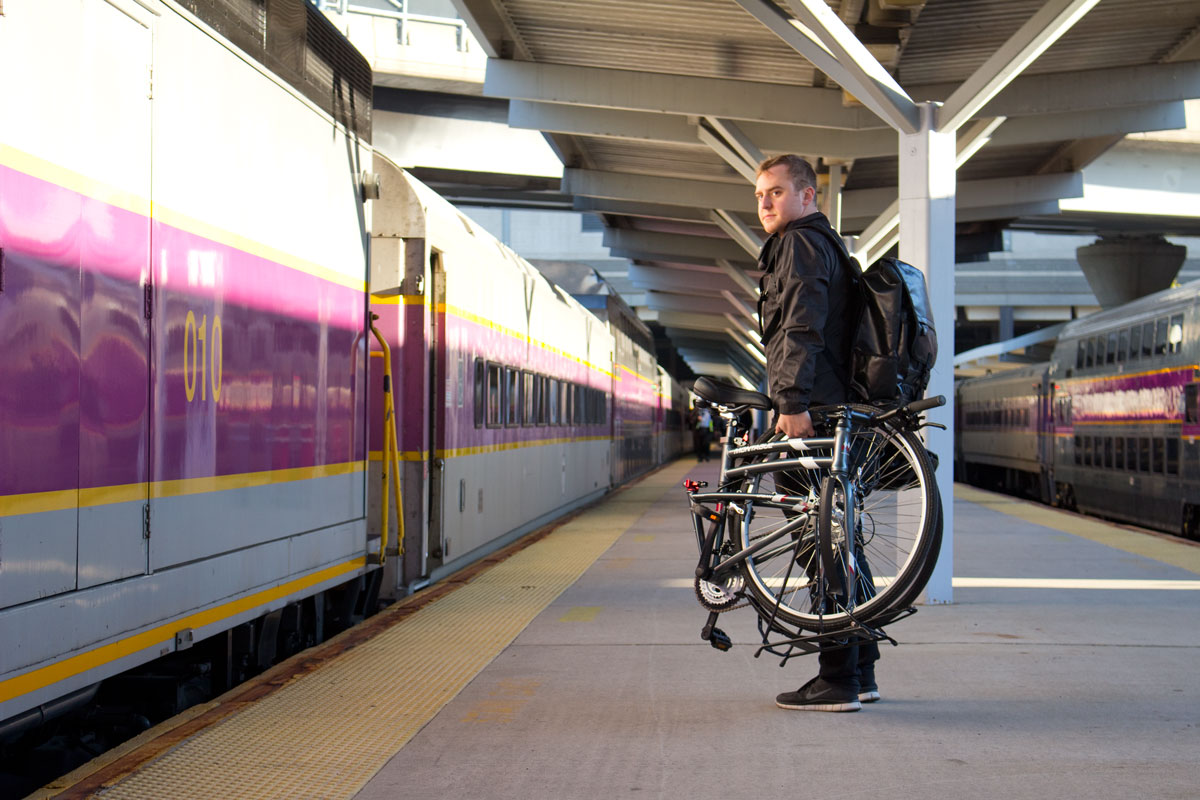
Commute with a Folding BIke | Montague Bikes
Tips for Traveling with a Folding E-Bike on Trains
To make your trip hassle-free, follow these practical tips:
- Check Ahead: Use apps or websites from operators like Amtrak or TfL to verify rules.
- Pack Smart: Invest in a protective bag to keep your bike clean and compliant.
- Battery Safety: Ensure batteries are certified and never charge on board. Remove if possible for air travel, but trains usually allow them attached.
- Etiquette: Fold your bike before boarding, store it securely, and be mindful of other passengers.
- Alternatives: If trains aren’t an option, consider buses or ferries, which often have similar folding ebike train legal leniencies.
| Region | Folding Allowed? | Key Restrictions | Fees |
|---|---|---|---|
| USA (Amtrak) | Yes, as carry-on | Under 50 lbs, max dimensions 34x15x48″ | Usually free for folding |
| UK (TfL) | Yes, folded | Non-folding banned post-March 2025 | Free |
| Europe (Eurostar) | Yes, in bag | Max 85cm, no charging | Free for folding |
| Germany (DB) | Yes | Reservation for non-folding | €9-19 bike ticket |
Benefits of Choosing a Folding E-Bike for Train Travel
Beyond legality, folding e-bikes offer numerous advantages. They’re perfect for “last-mile” commutes—ride to the station, fold and board the train, then unfold at your destination. This multi-modal approach reduces carbon emissions and saves time compared to driving or walking.
Environmentally, e-bikes use far less energy than cars, and their foldable design encourages public transport use. Health-wise, the pedal-assist feature promotes exercise without exhaustion. Economically, avoiding parking fees and fuel costs adds up. If you’re concerned about a folding ebike train legal issues, rest assured that their compact nature often grants them special status.

this is the World’s Smallest electric bike that you can pedal OXFO OX 1 review
Safety Considerations and Best Practices
Safety is paramount when questioning if a folding ebike train legal. Lithium-ion batteries can overheat, so opt for UL-certified models. On trains, keep batteries off and inspect for damage before travel. Follow operator guidelines to prevent accidents—never block aisles or doors.
For riders, wear helmets and use lights for visibility. Maintenance is key: Regularly check brakes, tires, and folding mechanisms to ensure reliability during trips.
Conclusion: Embrace the Freedom of Folding E-Bike Train Travel
In summary, is a folding ebike train legal? In most cases, yes—especially when compared to non-folding models. From Amtrak’s carry-on allowances in the US to TfL’s folded exemptions in the UK and Europe’s harmonized rules, these bikes unlock seamless travel. By staying informed and prepared, you can enjoy the best of both worlds: electric assistance and public transit efficiency. If you’re ready to upgrade your commute, consider a folding e-bike today—it’s not just legal; it’s liberating.
