
In today’s world, where climate change is a pressing concern, finding sustainable ways to get around is more important than ever. One of the most effective and accessible options is switching to an electric bike, or eBike. If you’re looking for the best way to reduce carbon emissions with an eBike, you’re in the right place. This guide will explore how eBikes can significantly lower your environmental impact, provide practical tips for maximizing their benefits, and offer insights into why they outperform traditional vehicles in many scenarios. Whether you’re commuting to work, running errands, or enjoying leisure rides, eBikes offer a fun, efficient, and eco-friendly alternative that can make a real difference.
What is a Carbon Footprint and How Do eBikes Help?
Before diving into the specifics, let’s clarify what a carbon footprint means. Your carbon footprint is the total amount of greenhouse gases, primarily carbon dioxide (CO2), that you produce through daily activities like transportation, energy use, and consumption. Transportation alone accounts for a significant portion of global emissions, with cars and trucks being major contributors.
eBikes stand out as a powerful tool in combating this. Unlike gas-powered vehicles, eBikes run on electricity, producing zero tailpipe emissions during operation. Even when accounting for the electricity used to charge them, their overall carbon output is dramatically lower than that of cars. For instance, riding an eBike emits just about 5 grams of CO2 per passenger-mile, compared to 266 grams for a conventional car. This makes them an ideal choice for urban dwellers aiming to shrink their environmental impact without sacrificing convenience.
Imagine zipping through city streets on a sleek eBike, bypassing traffic jams while knowing you’re contributing to cleaner air.

https://powerpedalse-bikes.com
10 Reasons Why You Should Choose A City Ebike | Momentum Bikes US | Momentum Bikes US
This image captures the essence of eBike commuting in a bustling urban setting, highlighting how seamlessly they integrate into daily life.
The Environmental Benefits of Switching to an eBike
The best way to reduce carbon emissions with an eBike starts with understanding their broad advantages. First and foremost, eBikes replace short car trips, which are often the most inefficient and polluting. Studies show that shared eBikes can decrease carbon emissions by 108–120 grams per kilometer traveled, especially in areas with limited public transport options. By opting for an eBike instead of driving, you not only cut down on CO2 but also reduce noise pollution and traffic congestion.
Moreover, eBikes are incredibly energy-efficient. They use far less power than electric cars—about 10 to 30 times more efficient in terms of climate impact per mile. This efficiency stems from their lightweight design and the fact that they combine human pedaling with electric assistance, minimizing energy waste. Over a year, using an eBike can save up to 500 pounds of carbon emissions compared to driving.
Beyond emissions, eBikes promote sustainable habits. They encourage more outdoor activity, which can lead to healthier lifestyles and less reliance on fossil fuels. In cities like Denver, eBike incentive programs have shown that participants replace an average of 21.6 car miles per week with bike rides, leading to substantial collective reductions in greenhouse gases.
To visualize the impact, consider this infographic that breaks down how eBikes contribute to climate action.
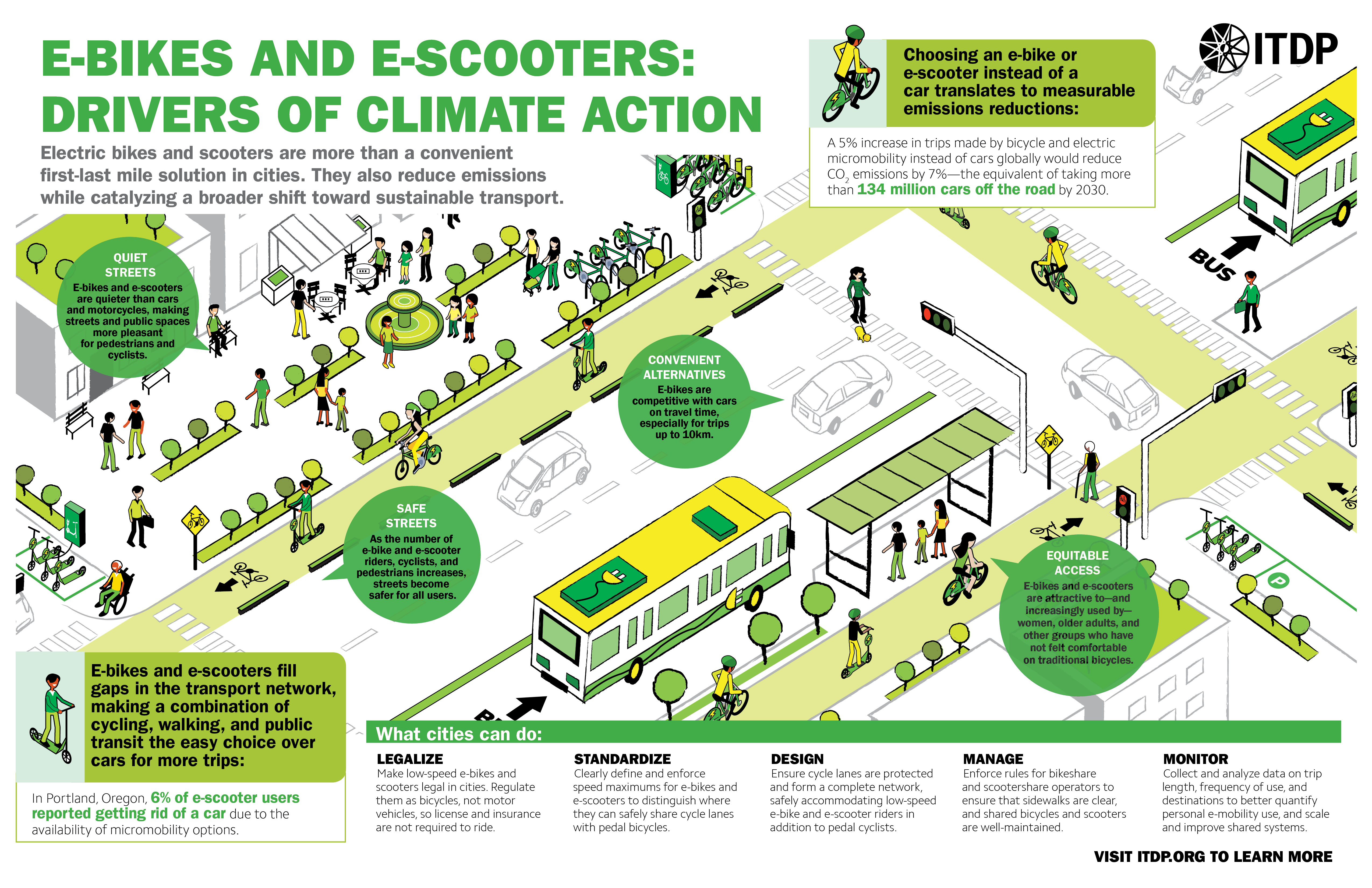
E-Bikes & E-Scooters: Drivers of Climate Action – Institute for Transportation and Development Policy
This graphic illustrates the broader role of eBikes in reducing urban emissions and fostering equitable access to green transport.
Comparing eBikes to Cars, Bikes, and Public Transport
To truly appreciate the best way to reduce carbon emissions with an eBike, it’s helpful to compare them to other modes of transportation. Traditional cars, even efficient ones like hybrids, emit significantly more CO2 over their lifecycle. For example, a gas car produces around 350 grams of CO2 per mile, while an eBike charged on a standard grid might only account for 25 grams per mile, including manufacturing impacts.
Even compared to regular bicycles, eBikes can have a lower long-term carbon footprint in certain contexts. While walking or pedaling a non-electric bike produces minimal emissions (mostly from food production for the rider), eBikes enable longer trips that might otherwise require a car, amplifying their savings. One analysis suggests that after the first year, eBikes produce an order of magnitude lower emissions than walking for equivalent distances due to their efficiency.
Public transport is another green option, but eBikes shine for first- and last-mile connectivity. Combining an eBike with buses or trains can cut overall emissions further by reducing the need for short drives to stations. In fact, eBikes are often called the “lowest-emission motorized means of transportation.”
Here’s a quick comparison table to highlight the differences:
| Transport Mode | CO2 Emissions per Mile (grams) | Pros for Carbon Reduction | Cons |
|---|---|---|---|
| Gas Car | 266-350 | None for short trips | High emissions, congestion |
| Electric Car | 200 (grid-dependent) | Zero tailpipe | High upfront battery impact |
| Regular Bike | ~21 (from rider’s food) | Very low | Limited range for some |
| eBike | 5-25 | Efficient, versatile | Minor charging emissions |
| Bus/Train | 50-100 (shared) | Scalable for masses | Fixed routes |
This chart underscores why eBikes are a top contender for personal carbon reduction.
For a visual breakdown, check out this comparison chart.
:max_bytes(150000):strip_icc()/americanbattery-62f56c482b88444f803ad4a61db1cb1c.jpg)
Riding a Bike Has One-Tenth the Impact of an Electric Car
It shows lifecycle emissions, emphasizing how eBikes stack up against vehicles like the Tesla Model 3.
Practical Tips: The Best Way to Reduce Carbon Emissions with an eBike
Now that we’ve covered the why, let’s focus on the how. The best way to reduce carbon emissions with an eBike involves strategic choices and habits.
- Choose the Right eBike: Opt for models with efficient batteries and lightweight frames. Look for lithium-ion batteries that last longer, reducing the need for frequent replacements and their associated emissions. Cargo eBikes are great for errands, replacing multiple car trips.
- Replace Car Trips: Use your eBike for commutes under 10 miles. Research indicates eBikes are competitive with cars for such distances, cutting emissions by up to 140 times per trip.
- Charge Smartly: Power your eBike with renewable energy sources like solar panels at home. This can make your rides virtually carbon-neutral. Avoid overcharging to extend battery life.
- Combine with Public Transit: For longer journeys, foldable eBikes pair perfectly with trains or buses, minimizing overall fossil fuel use.
- Advocate for Infrastructure: Support bike lanes and charging stations in your community, as better access encourages more people to adopt eBikes, amplifying collective impact.
By integrating these practices, you can maximize savings—potentially offsetting hundreds of pounds of CO2 annually.
Picture yourself on an eBike adventure in a natural setting, where sustainability meets enjoyment.
Green Electric Bike Guide: Sustainable Transport Revolution
This scene represents the harmony between eBikes and the environment, ideal for eco-conscious riders.
Maintenance and Longevity: Keeping Your eBike Green
Proper maintenance is key to ensuring your eBike remains an effective tool for carbon reduction. A well-maintained eBike lasts longer, meaning fewer resources are used for replacements.
- Battery Care: Store at 50-80% charge in a cool, dry place. Use the manufacturer’s charger and avoid extreme temperatures to prevent degradation.
- Tire and Chain Checks: Keep tires inflated and chains lubricated for optimal efficiency, reducing the energy needed per ride.
- Regular Servicing: Clean your eBike after rides, especially in wet conditions, to prevent rust and wear.
These steps not only extend your eBike’s life but also minimize indirect emissions from manufacturing new parts.
For handy tips, refer to this maintenance guide.

Electric Bike Maintenance and Care Guide
This infographic provides simple steps to keep your eBike’s battery in top shape.
Incentives and Programs to Get Started
Governments and organizations recognize eBikes’ potential, offering incentives to make them more accessible. In places like Denver, rebates of $400–$1,200 have led to thousands ditching cars, saving over 6,000 metric tons of CO2 annually if scaled up. Check local programs—many provide discounts for low-income households, making the best way to reduce carbon emissions with an eBike even more affordable.
While incentives can cost $4,000 per additional eBike purchase from a climate perspective, the health and equity benefits make them worthwhile.
Conclusion: Embrace the eBike Revolution
The best way to reduce carbon emissions with an eBike is simple: start riding one today. From slashing personal CO2 output to contributing to cleaner cities, eBikes offer a multifaceted solution to environmental challenges. By choosing efficient models, adopting smart habits, and maintaining your ride, you can amplify these benefits. As more people join the movement, supported by incentives and infrastructure, we’ll see even greater collective impact. So, gear up, pedal on, and be part of the change—your planet will thank you.
