
Whether you’re dodging bad weather, squeezing in workouts during a busy schedule, or simply looking to maintain your fitness without leaving home, creating the best indoor setup for your e-bike can transform your riding experience. In this comprehensive guide, we’ll explore everything you need to know about building an effective and enjoyable indoor e-bike station. From selecting the right trainer to optimizing your space and integrating smart tech, this setup allows you to pedal year-round with the convenience of electric assistance. As e-bikes continue to gain popularity in 2026, indoor training has become a game-changer for commuters, fitness enthusiasts, and casual riders alike.
E-bikes, with their pedal-assist features, make indoor sessions more accessible and less intimidating than traditional bikes. You can adjust the assistance level to match your fitness goals, making it easier to tackle virtual hills or long endurance rides. Plus, with advancements in smart trainers and apps, your best indoor setup ebike can feel like a real outdoor adventure—minus the traffic or rain.
Why Choose Indoor E-Bike Training?
Indoor cycling on an e-bike offers a host of advantages that go beyond just staying active. Here are some key benefits backed by cycling experts and recent trends.
First, it’s incredibly time-efficient. Unlike outdoor rides where you deal with traffic lights, hills, or route planning, indoor sessions let you jump straight into your workout. You can complete a high-intensity interval training (HIIT) session in under an hour, focusing purely on your pedaling without interruptions. This is especially useful for e-bike users who might use the motor assist to recover between efforts, making training more productive.
Second, it beats unpredictable weather. In 2026, with climate patterns shifting, indoor setups ensure you never miss a ride due to rain, snow, or extreme heat. You control the environment, avoiding the risks of slippery roads or poor visibility.
Third, training with power metrics is a major perk. Most modern smart trainers come with built-in power meters, allowing you to track your output precisely. For e-bike riders, this means you can fine-tune your pedal-assist levels to build strength and endurance without over-relying on the motor. Studies from cycling communities show that consistent indoor training can improve cardiovascular health, muscle strength, and even mental well-being by reducing stress through endorphin release.
Additionally, indoor e-bike training is safer and more controlled. No worries about traffic accidents or uneven terrain—perfect for beginners or those recovering from injuries. It’s also physiologically productive; you can maintain steady efforts without coasting downhill, leading to better fitness gains in less time. Riders report feeling more motivated when combining e-bike assist with virtual platforms, turning workouts into engaging games or group rides.
Finally, it’s eco-friendly and cost-effective long-term. By extending your e-bike’s use indoors, you reduce wear on outdoor components while saving on gym memberships or fuel for driving to trails.
https://powerpedalse-bikes.com
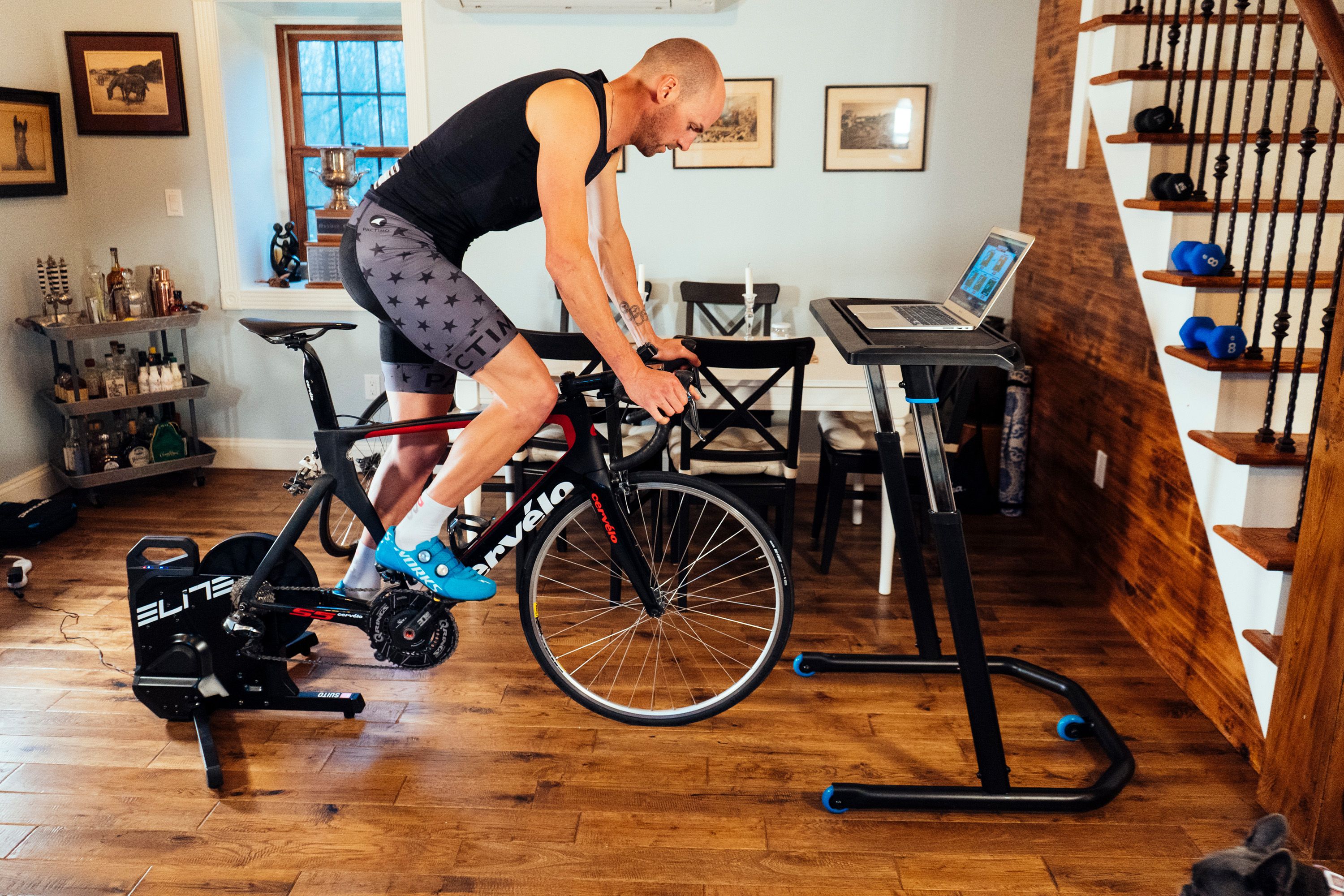
Bike Trainer Setup: How to Set Up an Indoor Cycling Studio
Essential Components for the Best Indoor Setup E-Bike
To create the ultimate best indoor setup ebike, you’ll need a few key pieces of equipment. Start with the basics and build from there based on your budget and space.
1. The Trainer: The Heart of Your Setup
The trainer is where your e-bike mounts for stationary riding. For e-bikes, opt for smart trainers that handle the extra weight and power. Direct-drive models, where you remove the rear wheel and attach the bike directly to the trainer, offer the most realistic feel and accuracy.
Top picks for 2026 include:
- Wahoo Kickr Core 2: Affordable at around $500-$600, it supports up to 1,800 watts and 16% gradients. It’s quiet, stable, and integrates seamlessly with apps like Zwift. Ideal for e-bikes due to its sturdy build.
- Tacx Neo 2T Smart Trainer: Priced at $900, this high-end option simulates road feel with vibrations and handles steep climbs up to 25%. It’s self-powered, so no outlet needed during rides, and works great with heavier e-bikes.
- Elite Justo 2: For analytics lovers, this $800 trainer offers precise power measurement (±1% accuracy) and virtual shifting.
When choosing, ensure compatibility with your e-bike’s thru-axle or quick-release system. E-bikes often require adapters for their wider hubs.
2. Floor Mat and Riser Block
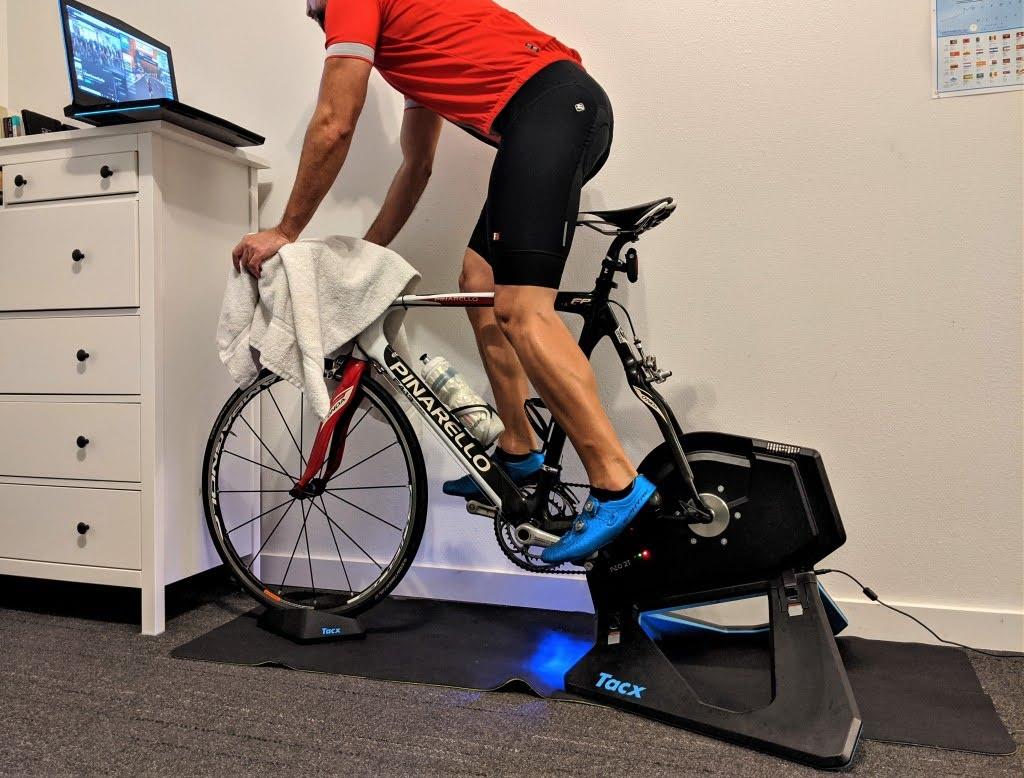
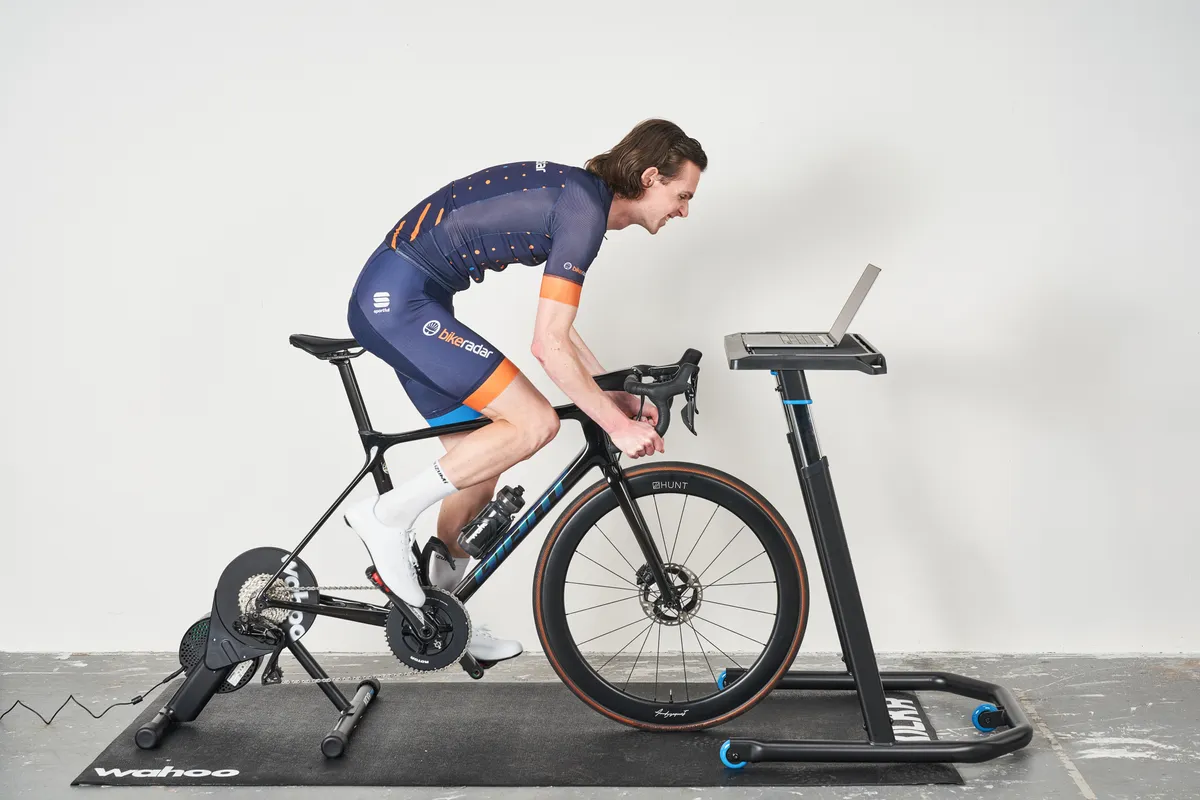
A thick floor mat protects your floors from sweat and vibrations while reducing noise. Look for ones like the Wahoo Kickr Mat ($80) that’s sweat-proof and grippy.
A front-wheel riser block levels your bike for a natural riding position, preventing strain on your back and neck. Basic ones cost $20-$30.
3. Cooling and Comfort Accessories
Indoor sessions get sweaty, so a powerful fan is essential. The Wahoo Kickr Headwind ($250) adjusts speed based on your heart rate or speed for optimal cooling.
Add a bike desk or stand for your tablet/laptop to hold your device securely. Ergonomic additions like gel seat covers can make long rides more comfortable.
4. Tech Integration
Connect your setup to a smart TV or computer for immersive experiences. Heart rate monitors and cadence sensors enhance data tracking.
Budget breakdown for a basic best indoor setup ebike: $400-$600 (trainer + mat + block). Premium setups can reach $1,500+ with all bells and whistles.
Top Recommendations for E-Bike Trainers in 2026
Based on expert reviews and user feedback, here are standout trainers tailored for e-bike indoor use.
| Trainer Model | Price | Max Power | Max Gradient | Key Features | Best For |
|---|---|---|---|---|---|
| Wahoo Kickr Core 2 | $500-$600 | 1,800W | 16% | Easy setup, quiet operation, Zwift-ready | Beginners and budget-conscious riders |
| Tacx Neo Bike Plus | $3,000+ | 2,200W | 25% | Realistic road simulation, adjustable fit | Serious cyclists wanting a full smart bike |
| Elite Justo 2 | $800 | 2,300W | 24% | High accuracy, flex feet for natural sway | Data-driven training |
| Wahoo Kickr V6 | $1,200 | 2,200W | 20% | Wi-Fi connectivity, ERG mode | Advanced users with e-bikes |
| Cycplus T7 Smart Bike | $1,500 | 2,000W | 20% | Great value, adjustable for multiple users | Families or shared setups |
These models are praised for their durability with e-bikes’ motors and batteries. Always check weight limits—most handle up to 300 lbs.
For e-bike specifics, ensure your battery is charged before sessions, and avoid overusing the motor to prevent overheating.
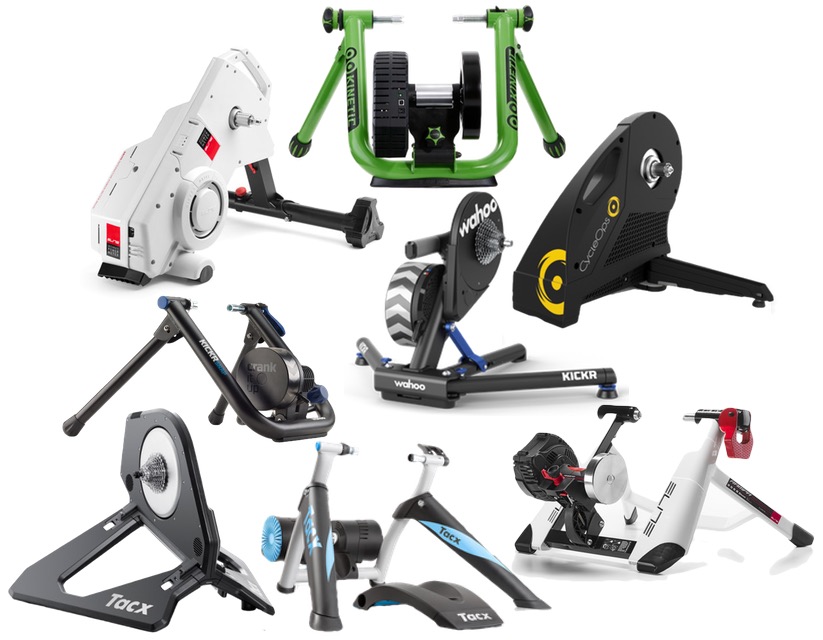
Top Indoor Electric Bike Trainers (2018 Top Picks For Cyclists)
Step-by-Step: How to Set Up Your Indoor E-Bike Station
Setting up is straightforward with the right tools. Here’s a detailed guide.
- Choose Your Space: Pick a well-ventilated area with enough room (at least 6×4 feet). Basements or spare rooms work best. Ensure stable flooring and nearby outlets.
- Prepare Your E-Bike: Clean the chain and tires. For direct-drive trainers, remove the rear wheel (use a chain keeper to protect the frame). Install the provided cassette if needed.
- Mount the Bike: For wheel-on trainers, secure the rear axle in the clamps. For direct-drive, attach the chain to the trainer’s cassette. Use the riser block under the front wheel for leveling.
- Connect Tech: Pair the trainer via Bluetooth or ANT+ to your device. Calibrate using the app (e.g., spin at 20-25 mph for accuracy).
- Add Accessories: Place the mat underneath, set up the fan, and position your screen at eye level.
- Test Ride: Start with a short session to check stability. Adjust saddle height if it feels off—indoor setups can alter your position slightly.
Safety tip: For e-bikes, monitor battery temperature and avoid charging while riding indoors to prevent fire risks.

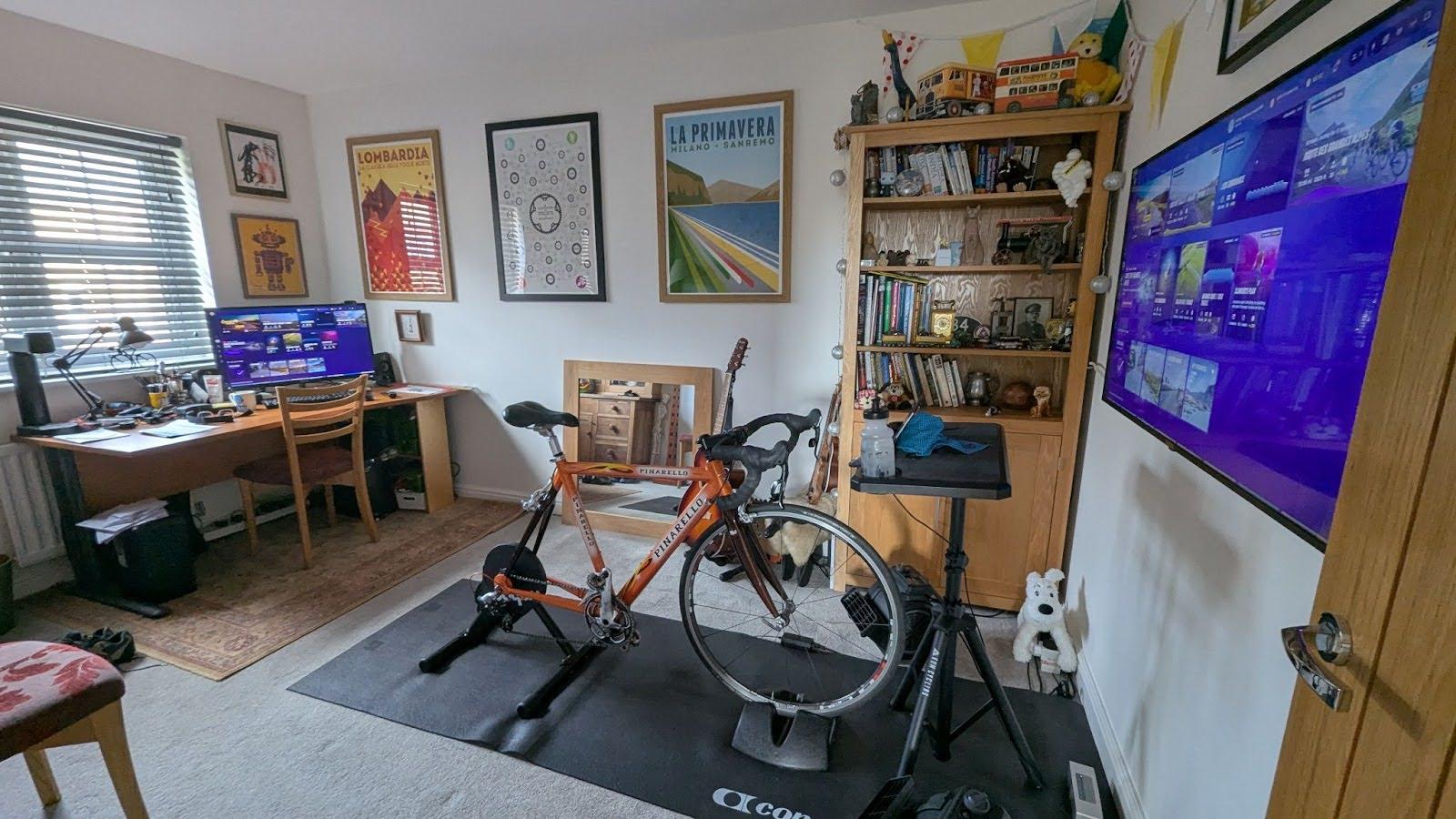
Software and Apps to Elevate Your Experience
No best indoor setup ebike is complete without software. Apps turn stationary riding into virtual worlds.
- Zwift: The gold standard for immersive group rides and races. Costs $15/month, compatible with most trainers. E-bike users love the power-ups for fun boosts.
- Rouvy: Focuses on real-world routes with augmented reality. Great for scenic training ($12/month).
- TrainerRoad: Data-focused for structured workouts ($20/month). Ideal for building e-bike-specific endurance.
- Peloton App: If you prefer classes, it’s $13/month with bike metrics integration.
Connect your e-bike’s display if it has Bluetooth for synced data. In 2026, apps like these offer AI-coached plans tailored to e-bike riders.
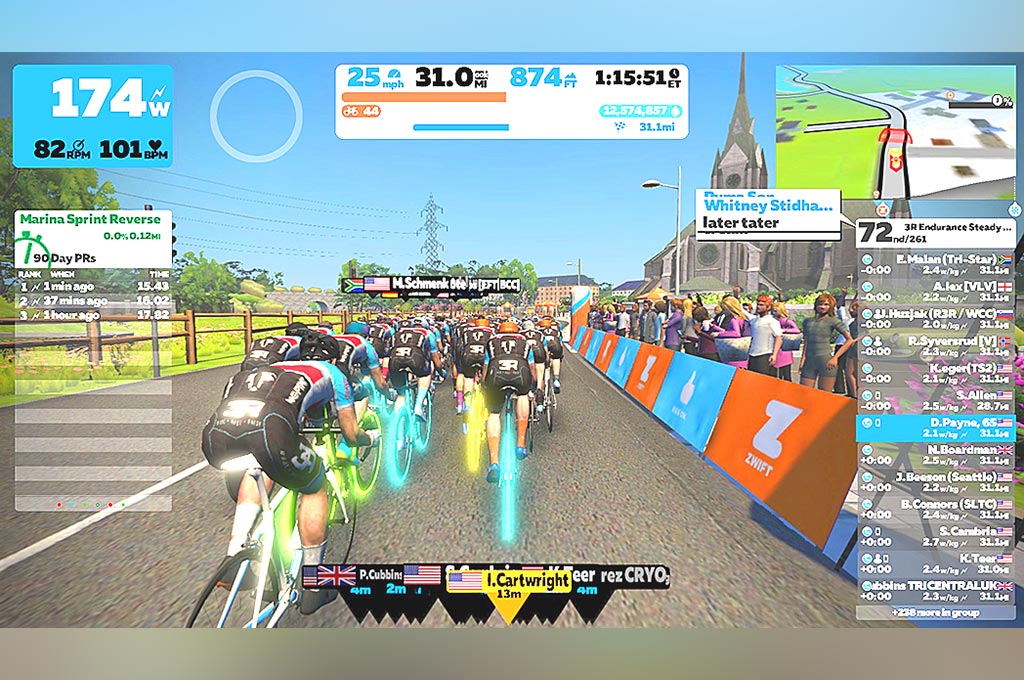
Indoor Cycling to Stay Fit During the Winter Months – Tualatin Life
Maintenance Tips and Common Mistakes to Avoid
Keep your setup running smoothly with regular care. Lubricate the chain every 100-200 miles of indoor use, as sweat can accelerate wear. Clean the trainer after sweaty sessions to prevent corrosion.
Common pitfalls:
- Skipping calibration: Leads to inaccurate power data.
- Poor ventilation: Overheating can damage your e-bike’s motor.
- Ignoring ergonomics: Adjust handlebars and seat to avoid discomfort.
- Overdoing it: Start slow to prevent burnout—mix indoor with outdoor rides.
For e-bikes, periodically check battery health and firmware updates for optimal performance.
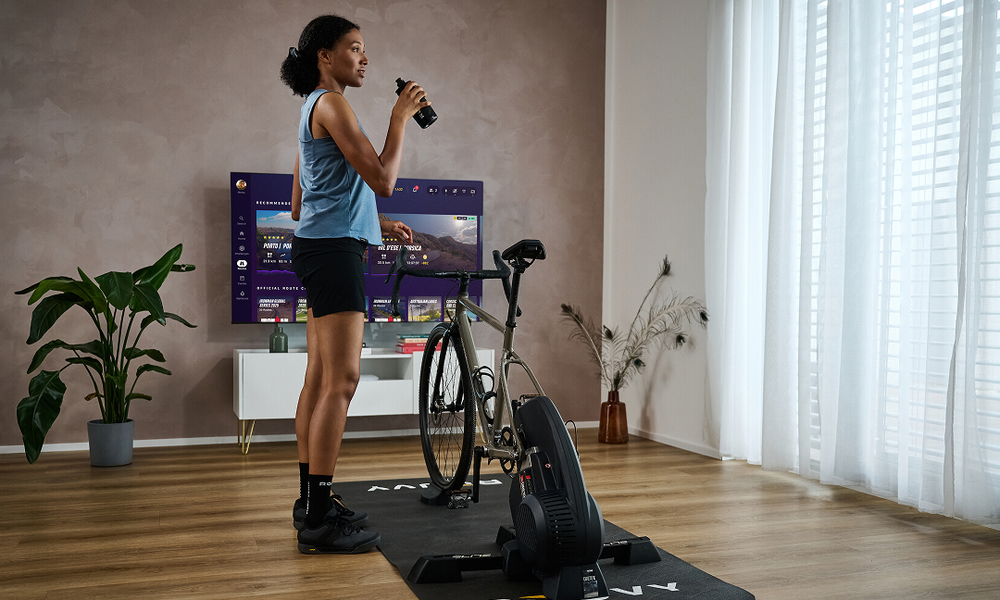
Indoor bike trainer setup: The Ultimate Guide | ROUVY
Final Thoughts on Building Your Best Indoor Setup E-Bike
Investing in the best indoor setup ebike opens up a world of consistent, enjoyable training. Whether you’re aiming for fitness gains, commuting prep, or just fun virtual adventures, the right combination of trainer, accessories, and apps can make all the difference. In 2026, with smarter tech and more affordable options, there’s never been a better time to bring the ride inside. Start small, experiment, and watch your cycling improve—rain or shine.
If you’re ready to upgrade, check out the latest models from Wahoo or Tacx for a seamless experience. Happy pedaling!
